A Closer Look at DHS RIV Studies: Insights That Matter for Decision-Makers
Updated: Mar 25
The release of the Remote Identity Validation (RIV) evaluations by the U.S. Department of Homeland Security (DHS) marks an important milestone for the identity verification industry. For years, enterprises have relied on fragmented, internal evaluations to assess vendors—often investing significant time, cost, and effort with limited comparability across solutions.
With the introduction of the RIV and subsequent rally efforts, DHS has begun to address this gap by bringing structure, transparency, and repeatability into how remote identity systems are evaluated.
This blog provides an objective perspective on what these studies have achieved, the value they bring to buyers, and areas where further clarity could strengthen their impact.
1. A Structured, Multi-Track Evaluation Approach

One of the most important contributions of the DHS evaluation is its structured approach to assessing identity verification systems.
By focusing on three distinct tracks—document verification, presentation attack detection (PAD), and document-to-selfie matching—the evaluation reflects how modern enterprise identity workflows are implemented in practice.
Historically, buyers evaluated these components in isolation or through custom integrations, leading to inconsistent benchmarks and fragmented insights. DHS’s framework aligns these components into a cohesive evaluation model, enabling more meaningful comparisons across vendors.
This approach mirrors real-world deployment architectures and provides a more practical lens for enterprise decision-making.
2. Standardization of KPIs Across the Industry
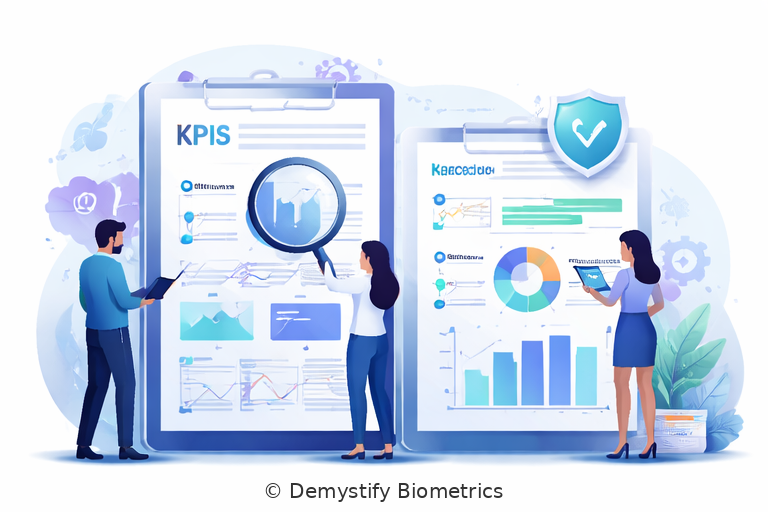
Another key advancement is the introduction of standardized key performance indicators (KPIs), along with defined thresholds.
In the absence of a common framework, different organizations have historically used varying metrics to evaluate vendors—often leading to inconsistent conclusions and misaligned expectations. DHS addresses this by:
Defining measurable KPIs across each track
Introducing minimum and stricter performance thresholds
Providing a baseline that can be consistently applied across evaluations
While this is not an exhaustive set of KPIs used by buyers—particularly in regulated markets—it provides a strong and practical starting point for evaluation.
This creates a shared language for performance assessment. Over time, such standardization has the potential to reduce ambiguity and streamline vendor selection processes across the industry.
3. High-Quality and Diverse Evaluation Datasets

Creating realistic and diverse datasets has been one of the most challenging aspects of evaluating identity verification systems—particularly for attack scenarios.
DHS has made significant progress by developing datasets that simulate a wide range of real-world conditions, including:
Document variations
Presentation attacks (both active and passive scenarios)
End-to-end identity workflows
This is a critical contribution. High-quality datasets not only improve the validity of the evaluation but also help establish benchmarks that are difficult for individual enterprises to replicate independently.
As these datasets continue to evolve and expand, they can further improve coverage of edge cases and emerging fraud patterns.
4. A Clearer View of the Current State of Technology

The evaluation results provide a grounded view of where the industry stands today.
While many vendors position their solutions as best-in-class, the structured results reveal that performance varies significantly across different tracks. No single category appears to be fully commoditized, and each area still presents opportunities for improvement.
An interesting observation is that only a subset of vendors have publicly shared or discussed their results. This highlights the competitive nature of the space and suggests that performance differentiation remains meaningful.
For buyers, this reinforces an important takeaway: identity verification should be evaluated as a set of specialized capabilities rather than a single, uniform solution.
Where the Evaluation Can Evolve Further
While the DHS RIV studies establish a strong foundation, there are areas where additional clarity could enhance their usefulness for enterprise buyers.
1. Relative Importance of KPIs
Not all KPIs carry equal weight in real-world decision-making.
For example, accuracy-related metrics often play a more critical role in buyers' decisions than supporting capabilities such as data extraction quality. While all KPIs are important, their relative impact on business outcomes varies.
Explicitly distinguishing between primary and supporting KPIs—or introducing weighted scoring—could help organizations interpret results more effectively and align them with their specific risk and operational priorities.
To address this gap, we conducted a structured analysis of the Biometrics Intelligence Hub, evaluating the relative importance of these KPIs and their influence on vendor selection decisions. Explore the KPI prioritization analysis: https://www.demystifybiometrics.com/dhsrivr2025
2. Limited Vendor Transparency in Results
The anonymization of vendor identities in the published results presents both advantages and limitations.
On one hand, it encourages broader participation and reduces reputational risk. On the other hand, it creates a practical challenge for buyers:
Is their current vendor part of the evaluation?
If so, how did it perform?
How should they compare alternatives?
Without clear mapping between results and vendors, organizations may still need to conduct additional due diligence—partially reintroducing the effort that these evaluations aim to reduce.
Striking a balance between transparency and participation incentives will be an important consideration as the program evolves.
Trust and Reliance on Certifications
While certifications such as ISO/IEC 30107-3 establish baseline PAD performance under

controlled conditions, the DHS results indicate that some solutions do not consistently meet thresholds in real-world scenarios.
This raises a key question for buyers: How much can certifications be relied upon in actual decision-making?
In practice, certifications should be viewed as a starting point—not a guarantee of performance—and complemented with structured evaluations and use-case-specific validation.
Conclusion: A Strong Foundation for the Industry
The DHS RIV evaluations represent a meaningful step forward in bringing structure and standardization to remote identity verification.
By introducing a multi-track evaluation framework, defining KPIs, and developing robust datasets, DHS has laid a strong foundation for more consistent and objective vendor assessments.
At the same time, there are clear opportunities to enhance the framework—particularly around KPI prioritization and result transparency—to further support enterprise decision-making.
As the industry continues to mature, efforts like these will play a critical role in shaping how identity verification technologies are evaluated, compared, and adopted at scale.
Still trying to make sense of DHS results for your business?
We’ve translated these evaluations into actionable insights for buyers—so you can:
Compare vendors across real-world use cases
Understand performance beyond raw metrics
Make confident vendor decisions
👉 Explore DHS Insights for Buyers:


Comments